
Introduction
Liquidmetal Technologies Impactful The advent of Liquidmetal Technologies Impactful stands as one of the most significant turning points in modern materials engineering. With a foundation rooted in amorphous metals — metals that eschew crystalline structure for an atomic “glass-like” randomness — this technology has quietly infiltrated industries from consumer electronics to aerospace, redefining what’s possible in structural integrity, weight-to-strength ratio, precision molding, and long-term durability.
In this article we explore how Liquidmetal has achieved its impact, the science behind the material, real-world applications, industrial implications, and the long-term transformative effects on manufacturing and design practices around the globe.
Liquidmetal Technologies Impactful The Science Behind the Alloy: What Makes Liquidmetal Exceptional
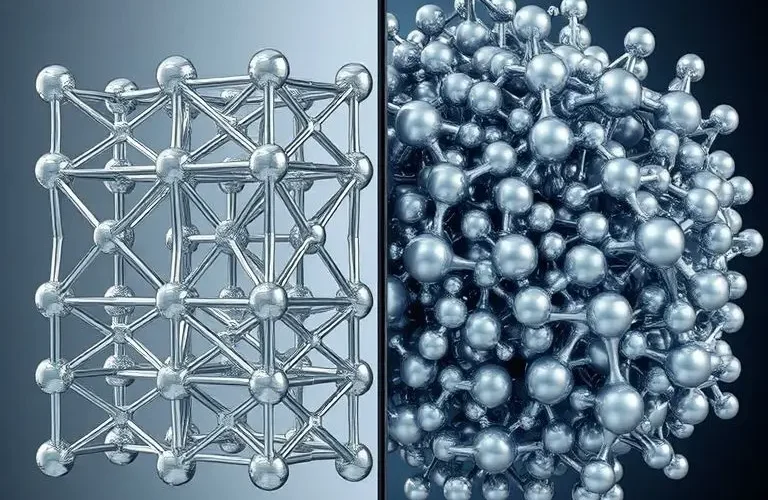
Liquidmetal Technologies Impactful At the heart of Liquidmetal’s breakthrough lies its status as an amorphous alloy — often referred to simply as liquidmetal alloy. Unlike conventional metals, which crystallize upon solidification and thus form grain boundaries that create structural vulnerabilities, Liquidmetal cools and solidifies without crystallizing, preserving a disordered atomic structure.Wikipedia+1
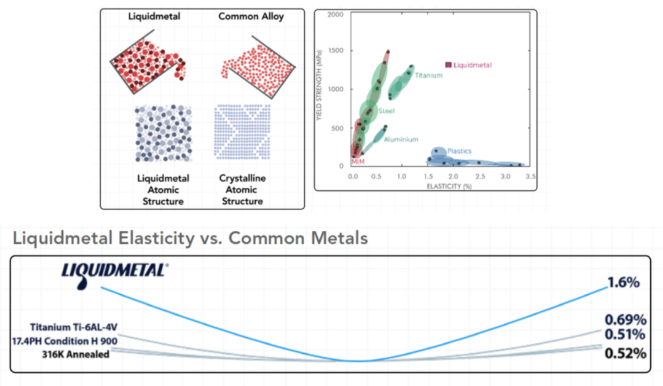
This amorphous state confers a suite of mechanical advantages: remarkable tensile strength, high elasticity, exceptional hardness, superior corrosion resistance, and excellent wear resistance. Marketing Tech+2Marketing Tech+2
Because of these properties, Liquidmetal parts emerge directly from molds with full mechanical integrity — without requiring secondary treatments like heat-treating, sintering, or intensive machining. liquidmetal.com+2cdn2.hubspot.net+2
In effect, Liquidmetal combines the best traits of metal and plastic: the strength and hardness of steel or titanium with the moldability and precision reminiscent of thermoplastic injection molding. industryweek.com+2liquidmetal.com+2
Liquidmetal Technologies Impactful This combination underpins how the technology becomes not just disruptive, but deeply impactful across multiple domains — enabling design complexity, mechanical performance, and manufacturing efficiency that were previously considered mutually exclusive.
Liquidmetal Technologies Impactful Industrial Adoption: liquidmetal industrial solutions
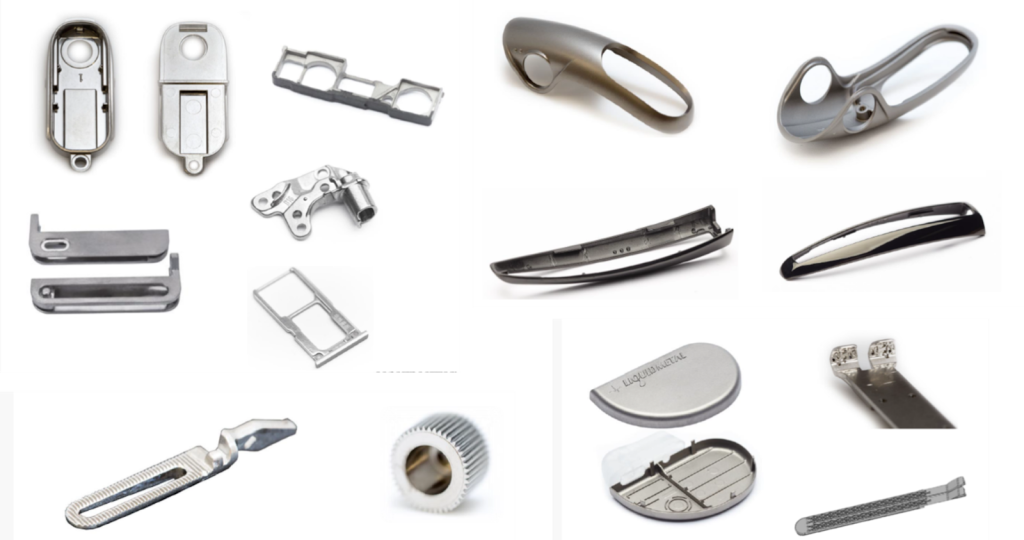
Liquidmetal Technologies Impactful, the company behind the alloy, offers a range of liquidmetal industrial solutions that have broad applicability. Their manufacturing process — called the LQM (Liquidmetal ® molding) process — melts feedstock under vacuum, injects molten alloy into steel molds, and forms final parts that require minimal or no post-processing.liquidmetal.com+2liquidmetal.com+2
Molded components deliver net-shape parts with tight dimensional tolerances, minimal shrinkage, and as-cast surfaces that are already polished or near-finished quality. cdn2.hubspot.net+2liquidmetal.com+2
These capabilities enable industries to rethink product fabrication, especially in sectors where both high strength and precision geometry matter. Examples include:
- Custom springs, locking mechanisms, and high-precision load-bearing elements. liquidmetal.com+1
- Gears and gear trains molded as single components with exact tooth geometry — avoiding grinding and machining while retaining durability. liquidmetal.com+1
- Small precision housings or enclosures for electronics, medical devices, sensor casings, and more. Marketing Tech+2Marketing Tech+2
In doing so, Liquidmetal industrial solutions enable higher-volume manufacture without sacrificing the high-level performance and resilience expected from metal components. Such versatility is a core reason why the technology is increasingly being adopted across sectors — from medical instruments to high-end consumer electronics, from aerospace hardware to industrial machinery.
Liquidmetal Technologies Impactful Real-World Applications and Success Stories
Liquidmetal Technologies Impactful The flexibility and strength of Liquidmetal have led to a variety of successful deployments. Among the most illustrative liquid metal examples:
- Consumer electronics: Some high-end devices have used Liquidmetal casings or components to improve durability while reducing weight. This was especially notable in early experiments with phone chassis, hinge housings, or small mechanical parts — where corrosion resistance, precision, and strength are critical. Liquidmetal Technologies+2Ubergizmo+2
- Medical instruments and surgical tools: The high strength-to-weight ratio, combined with corrosion resistance and ability to produce complex geometries, make Liquidmetal alloys attractive for surgical clamps, instruments, and precision components. Marketing Tech+1
- Industrial components and mechanical parts: Springs, locking mechanisms, sensors, and gears benefiting from both hardness and elasticity. liquidmetal.com+2liquidmetal.com+2
- Sporting goods: In earlier experiments, the elasticity and impact absorption of amorphous alloys were used in golf clubs, bats, and other sports equipment. While some early prototypes faced challenges, they showcased the potential for performance-oriented equipment benefiting from Liquidmetal’s unique material traits. Wikipedia+2industryweek.com+2
These real-world examples illustrate the multifaceted advantages of Liquidmetal: parts may be smaller, lighter, stronger, and longer-lasting — attributes that align with evolving demands across industries.
The Growing Company: liquid metal company and Global Expansion
Liquidmetal Technologies Impactful The company behind Liquidmetal alloys, often referred to generically as a liquid metal company, continues to expand its global footprint and manufacturing capacity. In a 2025 announcement, Liquidmetal Technologies revealed plans to open a new manufacturing facility in Hangzhou, China via a joint-venture subsidiary. The plant is slated for large-scale production of amorphous alloy products — demonstrating a clear commitment to scaling operations internationally.Business Wire+1
This expansion underscores the increasing demand for high-performance, precision-molded parts across industries — not just in niche applications but as a mainstay for future hardware manufacturing. The new plant’s capacity for numerous die-cast machines indicates readiness for mid-to-high volume production. Business Wire+1
As the firm scales, the adoption of Liquidmetal alloys may shift from specialized, high-cost applications to broader usage — especially in sectors valuing both premium quality and manufacturing efficiency.
Specialized Manufacturing: liquid metal welding company
While Liquidmetal excels at injection molding of amorphous alloys, certain applications demand assembly, joining, or welding of components. This has led to the emergence of specialized services under the descriptor liquid metal welding company — firms that understand the unique properties of amorphous metals and perform joining or fusion without damaging the inherent non-crystalline structure.
Because amorphous alloys behave differently from crystalline metals in thermal conduction and phase behavior, welding requires controlled thermal environments, precision thermal gradients, and care to prevent localized crystallization that could compromise mechanical integrity. Wikipedia+2Marketing Tech+2
Such welding capabilities broaden the applicability of Liquidmetal beyond monolithic cast parts — enabling composite assemblies, hybrid structures (mixing Liquidmetal with conventional metals or polymers), and modular designs that leverage the best of both worlds: the resilience of the alloy and flexibility of traditional materials.
Unique Design Conduits: Potential for liquid metal wheels and Structural Components
One intriguing frontier for Liquidmetal’s transformative potential lies in structural components where weight, durability, and spring-like properties matter — such as wheels, suspension elements, or dynamically loaded parts. The notion of liquid metal wheels is speculative but rooted in realistic engineering potential.
Because of Liquidmetal’s high strength-to-weight ratio, elasticity, and resistance to fatigue and corrosion, wheels, rims, or rotating components made from amorphous alloy could provide enhanced performance compared to aluminum, steel, or magnesium. They could offer:
- Reduced rotational mass (improved acceleration, efficiency)
- Better impact absorption under load
- Resistance to warping or fatigue over time
- Longevity even under extreme environmental stress
Though widespread commercial use of Liquidmetal wheels remains limited — due to cost and manufacturing complexity — the concept exemplifies how the alloy’s unique properties could redefine automotive, aerospace, or mechanical component design paradigms.
Thermal Management: Prospects for liquid metal thermal paste and Efficient Heat Transfer
High-performance electronics, computing hardware, and power systems often struggle with thermal dissipation. In this context, Liquidmetal’s thermal conductivity properties suggest promising applications — especially in the form of liquid metal thermal paste or thermal interface materials derived from amorphous metal technology.
Alloys with high thermal conductivity, when properly processed, can serve as conductive pads or pastes that outperform traditional silicon or ceramic-based thermal pastes. This can result in:
- Lower thermal resistance between surfaces
- More efficient heat dissipation from chips or power modules
- Reduced thermal cycling stress on components
- Enhanced performance stability under high load
Though exact commercial thermal pastes branded as “Liquidmetal” remain niche, the underlying technology demonstrates that amorphous metals can become integral to next-generation thermal management solutions — particularly in compact, high-density electronics, wearable technology, and high-performance computing. The thermal attributes of amorphous alloys, combined with their moldability, make them ideal candidates for tightly integrated thermal designs where form and function converge.
Engineering Challenges and Limitations
While the strengths of Liquidmetal are numerous, it is not without limitations and engineering challenges. For example:
- Amorphous alloys may exhibit different fatigue and crack-propagation behavior compared to crystalline metals — sudden failure without visible plastic deformation under extreme stress. Wikipedia+1
- Molding large parts with thick cross-sections remains difficult; current applications focus mostly on small-to-medium components. industryweek.com+1
- Specialized processing equipment (vacuum melting, controlled molding, precise die-casting) makes entry barriers high for small-scale manufacturers. liquidmetal.com+1
- Cost remains higher than standard aluminum, steel, or magnesium production — limiting widespread use where cost sensitivity dominates design decisions.
Nevertheless, many of these limitations are being addressed through ongoing research, optimized processing, hybrid material systems, and economies of scale as manufacturing capacity expands worldwide (e.g., new plants announced for 2025–2026). Business Wire+2Liquidmetal Technologies+2
Strategic Importance: Why Liquidmetal Matters for the Future
The transformative potential of Liquidmetal lies in its ability to merge design freedom, mechanical superiority, and production efficiency. It challenges prevailing trade-offs between strength and moldability, precision and volume, hardness and elasticity.
This confluence of attributes opens new design paradigms—allowing engineers and designers to reconceptualize what objects can be. Consider these transformative possibilities:
- Consumer electronics with metal enclosures that are lightweight, scratch-resistant, and moldable into complex shapes.
- Medical devices with high precision, sterilizable surfaces, minimal moving parts, and remarkable longevity.
- Industrial components that require minimal maintenance, resist corrosion and wear, and reduce the need for machining.
- Automotive or aerospace parts where weight reduction and structural resilience translate directly into performance gains.
In each case, Liquidmetal turns old constraints into opportunities, enabling a new generation of durable, efficient, and elegantly designed products.
The Road Ahead: Expansion, Scale, and Innovation
The ongoing expansion of manufacturing capacity — such as the 2025 announcement of a new facility in Hangzhou — signals that Liquidmetal is gearing up for large-scale production. Business Wire+1
As volume grows, costs per component should decrease, making the alloy more accessible to a broader set of industries. This could trigger a ripple effect: more adopters, more imaginative applications, and faster iteration cycles.
Research continues to push the boundaries of what amorphous alloys can do — including improved alloy compositions, hybrid metal-polymer composites, and integration with advanced manufacturing techniques such as micro-injection molding, 3D microfabrication, and high-tolerance casting for precision parts.
The synergy between material science, industrial engineering, and design creativity positions Liquidmetal as a cornerstone of next-generation manufacturing. Its influence will likely expand from niche, high-end use cases into mainstream industrial applications.
About the Author


