

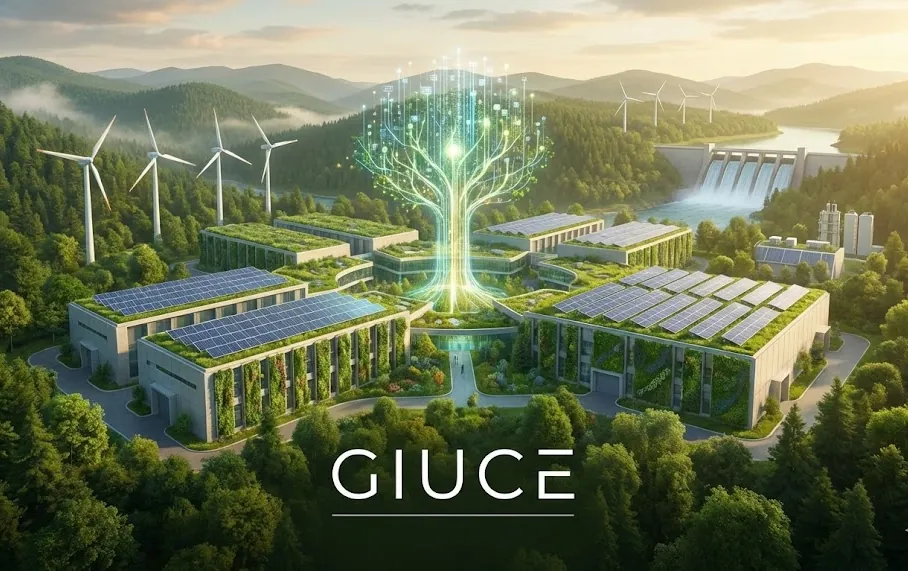
Catalytic Sustainable Tech Advancing Green Data Center Momentum describes a structural reorientation of digital infrastructure toward energy constrained engineering logic. Catalytic Sustainable Tech Advancing Green Data Center Momentum treats sustainability as a primary systems variable shaping architecture finance and operations rather than a reporting artifact.
The keyword anchors analysis in green data center momentum as an emergent property of optimized thermodynamics power sourcing and workload intelligence. Data centers transition from energy intensive facilities into adaptive techno industrial systems aligned with long term ecological limits.
Energy Architecture Foundations of Catalytic Sustainable Tech Advancing Green Data Center Momentum
Catalytic Sustainable Tech Advancing Green Data Center Momentum is grounded in the redesign of energy architecture at facility scale. Conventional centralized grid dependence exposes data centers to carbon volatility price instability and regulatory pressure. Modern designs integrate renewable sourcing storage and load management directly into operational control.
Long term power purchase agreements anchor predictable supply while enabling renewable project financing as documented by International Energy Agency renewable power systems. Energy architecture becomes a strategic asset rather than a utility dependency.
Hybrid Power Topologies and Onsite Generation
Large scale facilities deploy hybrid power topologies combining grid input onsite solar wind and energy storage. This configuration reduces transmission losses and peak demand exposure. Battery systems smooth intermittency and support uninterrupted operation. Power systems behave as adaptive networks responding dynamically to load and availability rather than fixed feeds.
Grid Interaction and Load Flexibility
Data centers increasingly operate as flexible grid participants. Workloads modulate in response to grid stress price signals and renewable availability. Non latency sensitive computation shifts temporally reducing peak load. This interaction supports grid stability and enables monetization of flexibility through demand response markets described by US Department of Energy grid integration.
Thermal Engineering and Heat Reuse Systems
Thermal management defines energy efficiency boundaries. Traditional air cooling wastes significant energy through overprovisioned airflow. Advanced facilities deploy liquid cooling rear door heat exchangers and immersion systems to increase thermal transfer efficiency.
Heat becomes a recoverable resource rather than waste. Engineering research from ASHRAE data center cooling establishes best practices for high density thermal design.
Liquid Cooling and High Density Compute
Liquid cooling enables higher rack densities while reducing fan power consumption. Coolant interfaces extract heat directly from processors. Sustainable Tech Advancing Green Data Center allows efficient support for AI and high performance workloads. Energy efficiency improves as thermal resistance declines.
Waste Heat Recovery and District Integration
Recovered heat is redirected to district heating networks industrial processes or absorption chillers. This closes energy loops and improves total system efficiency. Facilities become integrated nodes within urban energy ecosystems rather than isolated consumers. European deployments analyzed by EU Joint Research Centre energy reuse demonstrate viable large scale reuse models.
Sustainable Tech Advancing Green Data Center, Water Stewardship and Closed Loop Cooling
Water scarcity introduces material risk for data center expansion. Sustainable design minimizes freshwater consumption through closed loop cooling and alternative sources. Air assisted liquid cooling and evaporative systems optimized for climate reduce water intensity. Metrics tracked by Water Usage Effectiveness standards inform design decisions.
Alternative Water Sources and Reclamation
Facilities increasingly use reclaimed wastewater rainwater harvesting or seawater for cooling. Treatment systems ensure operational safety while reducing potable water demand. Sustainable Tech Advancing Green Data Center approach aligns infrastructure growth with regional water constraints.
Climate Adaptive Cooling Strategies
Cooling strategies adapt to local climate conditions rather than imposing uniform designs. Free cooling leverages ambient temperatures when possible. Intelligent control systems adjust dynamically. Water and energy efficiency improve through contextual optimization.
Carbon Aware Computing and Workload Orchestration
Carbon intensity varies temporally and geographically. Carbon aware computing aligns workload execution with periods and locations of lower emissions. Scheduling systems integrate grid carbon signals to minimize footprint. Research from Electricity Maps carbon data enables real time intensity awareness.
Temporal Shifting of Non Critical Workloads
Batch processing and training jobs defer execution until renewable availability peaks. Sustainable Tech Advancing Green Data Center reduces reliance on fossil generation. Performance impact remains minimal for non interactive workloads.
Sustainable Tech Advancing Green Data Center Geographic Load Distribution
Global platforms distribute computation across regions based on carbon intensity availability and latency constraints. This transforms sustainability into a scheduling problem solvable through software. Emissions decline without reducing throughput.

Materials Engineering and Circular Infrastructure Design
Embodied carbon in construction and hardware contributes significantly to lifecycle impact. Sustainable data centers prioritize low carbon materials modular construction and reuse. Steel concrete and composites are selected based on lifecycle analysis as outlined by World Green Building Council embodied carbon.
Modular Construction and Prefabrication
Prefabricated modules reduce waste improve quality control and shorten build timelines. Components are reused or repurposed across facilities. This reduces material throughput and accelerates deployment.
Hardware Lifecycle Extension and Reuse
Server lifecycles extend through refurbishment redeployment and component reuse. Decommissioned hardware feeds secondary markets or recycling streams. Resource extraction pressure declines as utilization efficiency increases.
Data Center Design Economics Under Sustainability Constraints
Sustainability reshapes economic models. Energy efficiency capital investment yields long term operational savings. Carbon pricing and regulatory compliance introduce explicit cost signals. Financial models increasingly account for total cost of ownership inclusive of environmental externalities. Analysis from McKinsey sustainable data center economics illustrates this shift.
Capital Allocation Toward Efficiency Infrastructure
Investment prioritizes cooling power distribution and automation over raw capacity. Higher upfront cost is offset by reduced operating expense and regulatory risk. Financial resilience improves.
Risk Mitigation and Asset Longevity
Sustainable facilities face lower obsolescence risk as regulations tighten. Asset lifespans extend. Financing costs decrease due to reduced risk profiles recognized by institutional investors.
Automation and AI Driven Facility Optimization
Operational efficiency depends on continuous optimization. AI systems monitor power cooling and workload patterns. Predictive models anticipate failures and inefficiencies. Autonomous control loops adjust parameters in real time. Solutions described by Google data center AI efficiency demonstrate significant gains.
Predictive Maintenance and Failure Prevention
Machine learning detects anomalies in equipment behavior. Maintenance occurs before failure. Downtime decreases. Resource waste from emergency response is eliminated.
Self Optimizing Control Systems
Control algorithms tune cooling airflow and power distribution dynamically. Static setpoints are replaced by adaptive responses. Efficiency improves continuously rather than episodically.
Grid Scale Impact and Regional Energy Transformation
Large data centers influence regional energy markets. Renewable procurement catalyzes infrastructure investment. Grid modernization accelerates. Data centers become anchor loads enabling renewable expansion as shown in BloombergNEF renewable investment analysis.
Renewable Project Bankability
Long term demand commitments reduce financing risk for renewable projects. Capacity expands faster. Regional energy mixes decarbonize.
Infrastructure Co Development
Data center development coordinates with grid upgrades transmission expansion and storage deployment. Energy ecosystems evolve in tandem rather than reactively.
Governance Reporting and Measurement Systems
Transparent measurement underpins credible sustainability claims. Metrics evolve beyond basic efficiency ratios toward holistic lifecycle accounting. Reporting frameworks such as Global Reporting Initiative standards guide disclosure.
Real Time Environmental Telemetry
Sensors stream energy water and emissions data continuously. Dashboards replace annual reports. Operational decisions reference live sustainability metrics.
Auditability and Verification
Third party verification validates claims. Data integrity systems prevent manipulation. Trust emerges from evidence rather than narrative.
Regulatory Alignment and Policy Interaction
Policy environments increasingly favor efficient infrastructure. Carbon reporting mandates efficiency standards and zoning regulations shape deployment. Sustainable facilities align proactively. Guidance from European Commission data center energy efficiency informs compliance strategies.
Anticipatory Compliance Design
Facilities are designed to exceed current standards. Future regulation becomes a non event. Operational continuity is preserved.
Incentive Utilization and Public Private Alignment
Tax credits grants and incentives offset capital costs. Alignment with public policy accelerates sustainable deployment.
Talent Systems and Operational Culture
Sustainable infrastructure requires interdisciplinary expertise. Engineers combine electrical mechanical and software knowledge. Operational culture prioritizes efficiency literacy. Training programs evolve accordingly as outlined by Uptime Institute sustainability education.
Sustainability Embedded in Operations
Operators treat energy water and carbon as first class metrics. Decision making incorporates environmental impact by default.
Cross Functional Engineering Collaboration
Design operations and finance collaborate continuously. Sustainability outcomes emerge from integrated decision processes rather than siloed initiatives.
Geographic Siting and Climate Intelligence
Site selection incorporates climate projections water availability and grid composition. Geographic intelligence reduces long term risk. Climate models referenced by IPCC climate projections inform planning.
Climate Resilient Location Strategy
Facilities avoid flood wildfire and heat stress zones. Resilience improves under climate volatility.
Proximity to Renewable Resources
Siting near renewable generation reduces transmission losses and curtailment. Efficiency improves structurally.
Data Center as an Energy System Node
Modern facilities function as active nodes within energy systems. They generate store consume and modulate power. This systemic role redefines infrastructure identity. Research from Rocky Mountain Institute energy systems integration supports this framing.
Bidirectional Energy Flows
Facilities export stored energy during grid stress. Energy flows become bidirectional. Data centers contribute stability.
Coordination With Smart Grids
Integration with smart grids enables fine grained coordination. Efficiency gains propagate beyond facility boundaries.
Technological Trajectory and Infrastructure Evolution
Catalytic Sustainable Tech Advancing Green Data Center Momentum reflects an irreversible trajectory. Efficiency intelligence and ecological constraint converge. Infrastructure evolves through continuous optimization rather than episodic overhaul. Data centers persist as scalable computation engines aligned with planetary limits.