
Virtual Reality 2026 An authoritative, forward-looking assessment of immersive tech’s next pivotal year
The landscape of immersive technology is on the cusp of a paradigmatic shift. As we move into Virtual Reality 2026 update, the confluence of hardware innovation, ecosystem recalibration, and software sophistication defines a watershed moment in the evolution of digital immersion. This comprehensive analysis explores upcoming releases, industry trends, community discourse, and projections that will shape the trajectory of VR from accessory ecosystems to foundational platform strategies.
The VR Landscape Entering 2026
Virtual Reality 2026 has grown beyond its early novelty stage into an intricate network of development pipelines, platform investments, and cross-industry collaborations. What was once a niche for hardcore gamers and technologists now permeates entertainment, training simulations, social platforms, and spatial computing research.
With several major headset releases on the horizon, Virtual Reality 2026 update encapsulates the transitionary phase where standalone hardware, PC-tethered systems, and mixed reality (MR) interfaces converge into a more mature market.
Industry trends indicate that 2026 will potentially deliver 4 to 8 new VR headsets to market a remarkable expansion from the relatively modest lineup of previous years.Reddit
Virtual Reality 2026 Community Conversations: VR Enthusiasts Weigh In
Platforms like Reddit offer real-time sentiment and rumor tracking, shaping public expectations and hype cycles. For instance, on vr 2025 reddit, many discussions revolved around emerging hardware, delayed releases, and the ongoing support of existing devices. A popular thread illustrated user frustration when Meta removed legacy virtual environment features from Quest headsets, highlighting how UX changes impact long-term ecosystem loyalty. Reddit
Another highly voted conversation speculated that between 4 and 8 new VR headsets might arrive in 2026, reflecting both optimism and wariness about market fragmentation and developer support. Reddit
Virtual Reality 2026, These community perspectives, though grounded in user experience rather than official announcements, enrich our understanding of organic market discourse alongside corporate strategy.
Major VR Headsets Releasing or Expected in 2026
Virtual Reality 2026 Valve’s Steam Frame and Next-Gen Momentum
Valve’s transition from the iconic Index series to its next-generation headset marks a pivotal evolution in the sector. The Steam Frame a standalone VR headset with both native and PC-streamed capabilities is slated for release in early 2026.Wikipedia
Virtual Reality 2026 Powered by a Qualcomm Snapdragon 8 Gen 3 chip running SteamOS, the Frame supports wireless streaming from PCs and can run software locally through compatibility layers. This flexibility represents a design philosophy that bridges standalone and PC environments without legacy lighthouse tracking.PC Gamer
This launch reinforces the PCVR to standalone convergence, where hardware no longer mandates a strict tethering requirement.
Virtual Reality 2026 Other Anticipated Headsets
A variety of new devices are also reportedly slated for 2026, including:
- Pimax Dream Air — boasting ultra-high resolutions and wide field-of-view optics that push visual fidelity boundaries. Extended Reality News
- Vivo Vision Expansion — a sleek standalone headset aimed at multimedia VR experiences. LinkedIn
- Pico Next Standalone Model — improving comfort and processing. LinkedIn
- Google Pixel Android XR Device — an intriguing Android-centric entry that might bridge smartphone ecosystems with immersive spatial computing. LinkedIn
Together, these anticipated releases signal a strategic broadening of hardware options beyond the traditional dominators like Meta and Apple.
Meta’s VR Strategy and Rumors
Meta New VR Headsets and Product Direction
Meta’s Reality Labs unit remains a focal point in VR evolution — albeit with strategic pivots. Discussions in meta new vr headsets circles suggest that Meta is prioritizing innovative wearable designs and ultralight solutions over incremental Quest generational upgrades.
Rumors indicate that a Meta Quest 4 release might be delayed or repositioned to focus on a hybrid form factor that combines VR, MR, and spatial computing elements. Tom’s Guide Meanwhile, internal resource adjustments and budget recalibrations at Reality Labs reflect an intensified emphasis on quality and profitability. Android Central
Virtual Reality 2026 Indeed, whispers about the Meta Quest 4 rumors release timeline vary widely, with some community voices claiming a 2027 launch or later, rather than 2026.Reddit
This Virtual Reality 2026 unpredictability demonstrates how large tech firms adapt to shifting competitive pressures from Apple, Valve, and emerging players in Asia.
Quest Platform Developments
Even as new hardware timelines fluctuate, the existing Meta Quest ecosystem continues to evolve. Software updates — including significant UI overhauls, AI-driven features, and interaction enhancements — ensure that Quest users enjoy richer experiences in the interim. MIXED Reality News
Community discussions about whether to pull the trigger on current Quest models or wait for next-gen releases further illustrate the balance between immediate immersion and future anticipation. Reddit
These debates are emblematic of a broader theme in VR adoption: timing matters as much as hardware capability.
Virtual Reality 2026 Beyond Standalone: The Proliferation of XR and Spatial Computing
While VR remains a cornerstone, Mixed Reality (MR) and Extended Reality (XR) are increasingly central to forward-looking roadmaps.
Platforms like Android XR are being championed through partnerships with display manufacturers and smart glasses developers. These initiatives — including light form-factor devices offering six degrees of freedom (6DoF) — blur the line between VR and AR. Android Central
The integration of spatial computing and context-aware AI places VR within a larger constellation of immersive technologies that interact with real-world inputs more seamlessly than ever before.
Software, Ecosystems, and Content Trends
AAA Content Expands Immersive Horizons
The release of blockbuster VR titles, such as Marvel’s Deadpool VR, signals a maturation of VR software offerings. These games push narrative depth and graphical fidelity while reinforcing VR’s potential as a mainstream entertainment medium. Wikipedia
Simultaneously, innovative multiplayer and cross-platform experiences — exemplified by titles like Thief VR: Legacy of Shadow and Elsewhere Electric — diversify VR’s appeal beyond traditional verticals. Wikipedia+1
Such content diversity is crucial: without compelling applications, even the most advanced hardware risks underutilization.
The Market Outlook: 2026 and Beyond
Growth and Fragmentation
The expected influx of VR hardware in 2026 promises significant growth. However, this expansion also heralds fragmentation risks as multiple platforms and operating systems compete for developer mindshare and consumer adoption.
Success in this evolving market hinges on interoperability and platform longevity. For instance, devices that support both native and streamed applications may enjoy broader appeal, whereas siloed platforms could struggle to attract content creators.
Virtual Reality 2030 — A Forward-Looking Vision
Peering beyond 2026, the broader trajectory of immersive technology remains compelling.
By 2030, VR is anticipated to transcend conventional visual immersion, integrating AI-augmented interactivity, advanced haptic feedback, and seamless MR transitions. Developers imagine experiences where virtual and physical realms coalesce to enhance learning, communication, and collaboration in ways previously relegated to science fiction.
This future hinges on several key developments:
- AI-driven adaptive environments that tailor experiences to user preferences.
- Cloud-native VR rendering frameworks (e.g., foveated streaming optimized for bandwidth and perception). arXiv
- Social and professional metaspaces that support productivity as well as play.
The path to 2030 will be anything but linear, but the momentum from VR’s 2025–2026 evolution sets a robust foundation for exponential innovation.
Virtual Reality 2026 R&D Target
Research and development priorities in virtual reality are undergoing a recalibration as the industry approaches 2026. No longer confined to incremental improvements in display resolution or raw processing power, VR R&D now targets systemic refinement — comfort, cognition, realism, and long-term usability. The ambition is not merely to enhance immersion, but to normalize it as a daily computing modality.
Human-Centric Immersion Engineering
One of the most prominent R&D targets is the reduction of physiological friction. Motion sickness, eye strain, and cognitive fatigue remain persistent barriers to mass adoption. Research teams are investing heavily in neuro-adaptive rendering pipelines, where frame rates, motion prediction, and visual complexity dynamically adjust to the user’s vestibular response in real time.
Advances in eye-tracking and pupillary response analysis enable systems to infer discomfort before the user consciously registers it. This allows proactive mitigation through subtle scene adjustments, such as micro-latency correction or peripheral blur modulation. The objective is invisible optimization — immersion without awareness of the machinery beneath it.
Optical Stack Innovation and Visual Fidelity
The optical subsystem remains a primary R&D battleground. Pancake lenses, holographic waveguides, and varifocal displays are being refined to address vergence-accommodation conflict, a long-standing limitation in VR ergonomics.
Research labs are experimenting with multi-plane focal rendering, enabling virtual objects at varying depths to appear naturally sharp. This is paired with retinal-level resolution targets, where pixel density approaches the limits of human visual acuity. The end goal is not hyperrealism for spectacle alone, but visual stability that supports extended session durations without fatigue.
Spatial Computing and Environmental Intelligence
Beyond visuals, VR R&D is increasingly focused on spatial intelligence. Systems are being trained to understand environments semantically, not just geometrically. This means recognizing surfaces, objects, and spatial affordances with contextual awareness.
Such advances allow virtual content to interact plausibly with real-world constraints. Virtual furniture respects physical walls. Digital tools align intuitively with hand movements. This research direction is foundational for mixed reality convergence and underpins broader ambitions tied to Virtual Vision Reality, where perception, space, and computation operate as a unified continuum.
Haptics, Tactility, and Embodied Feedback
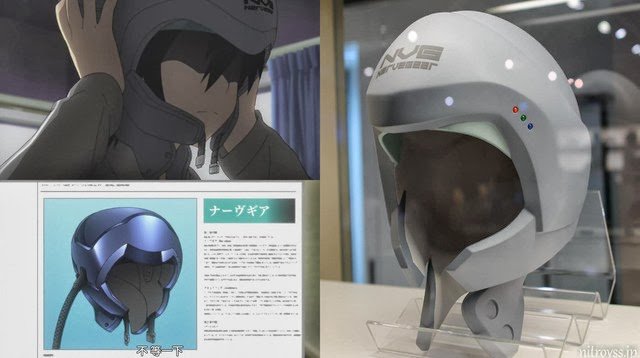
Another critical R&D target is embodied interaction. Visual immersion alone is no longer sufficient. Research institutions and private labs are developing next-generation haptic systems that move beyond simple vibration.
Emerging prototypes explore electro-tactile stimulation, ultrasonic mid-air feedback, and soft robotics integrated into gloves or wearables. These technologies aim to simulate texture, resistance, and inertia — restoring the missing sense of touch that limits current VR realism.
In parallel, force-feedback exoskeleton concepts are being tested in enterprise and medical simulations, where physical accuracy directly impacts training outcomes.
AI-Driven World Generation and Interaction
Artificial intelligence has become inseparable from VR research agendas. Procedural world generation powered by generative models allows environments to be created, modified, and personalized on demand. Rather than static levels, VR spaces evolve contextually based on user behavior, intent, and emotional cues.
Natural language interfaces are also under development, enabling users to converse with virtual agents that exhibit memory, reasoning, and adaptive personality traits. This transforms VR from a content-consumption medium into a participatory, co-creative space.
Networked Presence and Distributed Reality
As social VR expands, R&D targets now include low-latency distributed presence. Research focuses on synchronizing avatars, gestures, and facial expressions across global networks with imperceptible delay.
Edge computing and predictive modeling are central to this effort. By anticipating motion and compressing spatial data intelligently, VR systems can sustain high-fidelity social interaction even under constrained bandwidth conditions. This is essential for collaborative workspaces, virtual events, and persistent shared worlds.
Energy Efficiency and Thermal Management
Miniaturization remains a silent but critical research objective. High-performance VR demands substantial energy, yet user comfort requires lightweight, cool-running hardware. R&D teams are exploring new chip architectures, advanced materials, and passive cooling solutions to balance power and portability.
Energy-aware rendering techniques — where computational effort is allocated only where perceptually necessary — are becoming standard research domains. These optimizations extend battery life while preserving immersion quality.
Long-Horizon Research Toward 2030
While immediate R&D targets focus on deployable improvements for 2026, long-horizon research looks toward the broader vision of virtual reality 2030. This includes brain-computer interface experimentation, perceptual augmentation, and ethically aligned immersive systems.
The aspiration is not escapism, but augmentation — virtual environments that enhance cognition, creativity, and connection without displacing physical reality. In this context, VR R&D becomes less about devices and more about redefining how humans interface with information, space, and each other.
In sum, Virtual Reality R&D targets are converging on a singular objective: making immersive technology feel less like technology at all. When research succeeds, the interface dissolves, leaving only experience.
About the Author