
Expanding Electrical and Electronics World is a vast and multifaceted domain encompassing everything from the generation of electrical power to the intricacies of microelectronics, artificial intelligence integration, and global industrial innovation. In today’s interconnected era, electrical and electronics engineering has become the backbone of modern civilization, shaping industries, enabling communication, and powering the fabric of digital existence.
Expanding Electrical and Electronics evolution of this field began with the discovery of electricity’s fundamental properties in the 19th century and has since transformed into a sprawling ecosystem of science, engineering, and technological innovation. It is a realm where electrons and circuits meet artificial intelligence and where global summits, university research, and industrial giants converge to define the future.
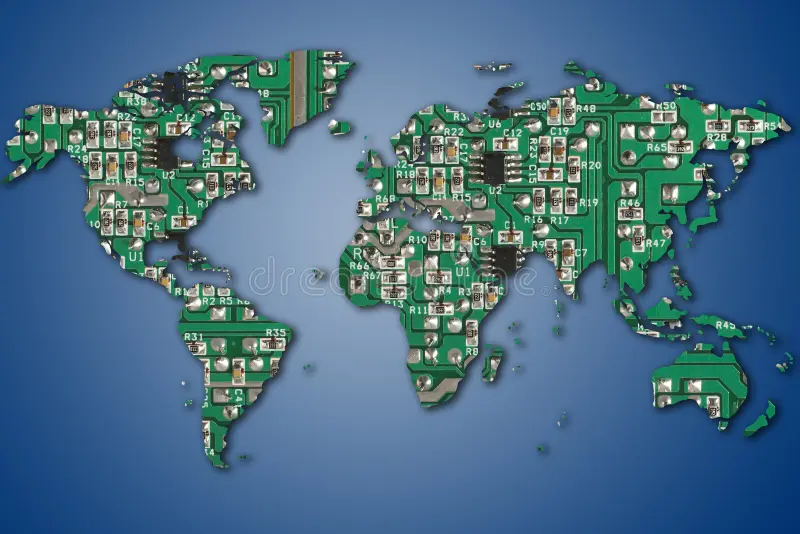
Expanding Electrical and Electronics Emergence and Influence of the Electrical and Electronics World
Expanding Electrical and Electronics World At its essence, the electrical and electronics world represents the integration of two intertwined disciplines: electrical engineering — focused on the study and application of electricity and electromagnetism — and electronics — centered on controlling the flow of electrons in circuits to create information systems, computing devices, and communication technologies.
Expanding Electrical and Electronics domain permeates nearly every aspect of modern life: from electric power systems and renewable grids to semiconductor devices and sensor networks, from autonomous vehicles to the internet of things (IoT). It’s a synergistic landscape where theoretical physics meets practical engineering challenges and societal needs.
Expanding Electrical and Electronics In the context of global development, electrical and electronics engineers are pivotal players who architect sustainable energy infrastructures, intelligent automation systems, and embedded computing solutions that redefine human experiences across industries.
Electrical and Electronics World Academic Excellence: QS World University Rankings Electrical and Electronics Engineering
The Ever Expanding Electrical and Electronics World fundamental measure of quality in the electrical and electronics world is academic excellence, and one of the most respected indicators for educational prowess is the QS World University Rankings Electrical and Electronics Engineering. These rankings provide insight into which universities are leading with research impact, academic reputation, and graduate employability in this field.
According to the QS World University Rankings by Subject, institutions such as Massachusetts Institute of Technology (MIT), Stanford University, and the University of California, Berkeley consistently top global charts for electrical and electronic engineering education and research. This not only attracts global talent but also fosters innovations that ripple across industries. Top Universities
Electrical and electronics engineering education now encompasses a wide range of specialized areas — from power systems and control engineering to microelectronics, photonics, and emerging fields such as neuromorphic computing and integrated AI — reflecting how academic programs adapt to technological shifts.
Global Knowledge Exchange: World Summit and Expo on Electronics and Electrical Engineering
Electrical and Electronics World Conferences and expos are vital platforms where breakthroughs are shared, collaborations are forged, and trends are debated. One of the most impactful gatherings in this arena is the World Summit and Expo on Electronics and Electrical Engineering.
Held over multiple days in international venues like Budapest, this summit brings researchers, professionals, industry leaders, and students together to exchange ideas, present scientific advancements, and explore emerging technologies. The event fosters innovation and collaboration across diverse regions and sectors. WSEEE 2025
For instance, the World Summit and Expo on Electronics and Electrical Engineering Scientific Summits 8 May highlighted research in foundational and applied electrical technologies, emphasizing sustainable solutions and cross-disciplinary synergy between electronics and power systems. Scientific Summits
Summits like this reflect how the electrical and electronics world is constantly evolving through dialogue and joint inquiry.
Foundational Knowledge: Topper World Fundamental of Electrical and Electronics Engineering
Understanding any field deeply begins with foundational principles. The Topper World Fundamental of Electrical and Electronics Engineering covers the core scientific and engineering principles such as circuit theory, electromagnetism, semiconductor physics, and digital signal processing. These basics underpin everything from household electrical circuits to advanced communication systems.
For students, engineers, and lifelong learners, mastering these fundamentals is akin to learning the alphabet before writing poetry. Without this foundational knowledge, one cannot innovate in complex domains such as power conversion, integrated circuits, or neural-network-accelerated hardware.
The challenge in foundational learning lies not just in memorizing formulas but in appreciating how these principles manifest in real-world design — for example, analyzing a power grid’s harmonics or designing filters for high-speed data transfer.
Regional Hubs and Innovation: World Electronics and Electrical Lahore
Cities across the world have become hubs for engineering excellence and industrial activity. One such example is World Electronics and Electrical Lahore, where regional expos and technology fairs showcase the growing strengths of South Asia’s tech ecosystem.
In places like Lahore, electrical and electronics industries contribute significantly to local economies, merging traditional manufacturing with innovation. Exhibitions in this region present new products, smart grid technologies, automation systems, and discussions about how electrification and embedded systems can elevate industrial competitiveness.
While not internationally ranked alongside Silicon Valley or East Asian tech corridors, regional clusters like Lahore demonstrate how the electrical and electronics world operates on global as well as local scales, creating opportunities for diverse stakeholders.
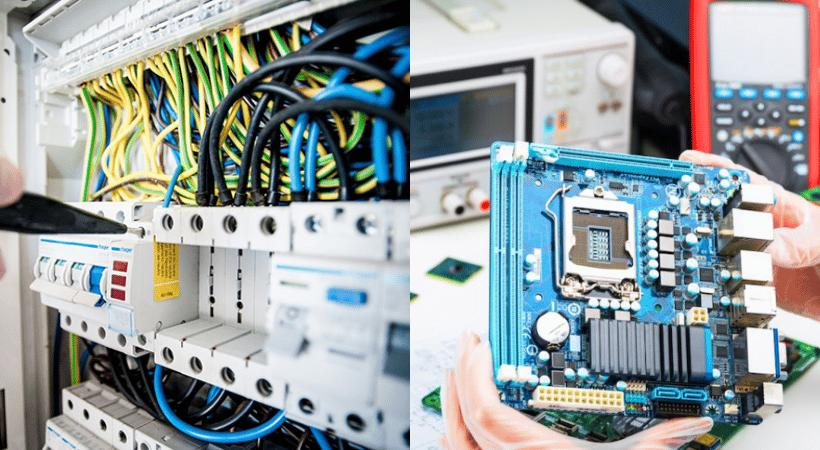
Corporate Titans: Top 10 Electrical and Electronics Companies in the World
The global industrial landscape of the electrical and electronics world is anchored by powerful corporations whose innovations and products shape global markets. While many companies specialize in either electrical equipment or electronic devices, some traverse both domains, integrating hardware, software, and system solutions.
Here are some influential global players often recognized among the top 10 electrical and electronics companies in the world:
- Apple Inc. – While traditionally known as a consumer electronics company, Apple drives innovation in system-on-chip design, power-efficient processors, and smart power management, influencing electronics engineering worldwide. Companies Market Cap
- Foxconn (Hon Hai Precision Industry) – The world’s largest contract electronics manufacturer, serving as the primary assembler of iPhones and other high-tech devices, with significant revenue streams tied to global electronics supply chains. Companies Market Cap+1
- Samsung Electronics – A South Korean powerhouse producing everything from memory chips to smartphones and advanced semiconductors. Companies Market Cap
- NVIDIA Corporation – A leader in GPU-accelerated computing that drives innovations in AI, HPC, and embedded platforms, integral to modern electronics engineering. The Wall Street Journal
- Dell Technologies – A major provider of computing systems and enterprise servers that rely on electrical and electronics engineering for high-efficiency designs. Companies Market Cap
- Sony Corporation – A Japanese multinational with significant contributions to consumer electronics, imaging sensors, and advanced materials. Companies Market Cap
- Lenovo Group – A global leader in personal computing and smart device ecosystems. Companies Market Cap
- LG Electronics – Known for home and industrial electronics, advanced energy systems, and smart devices. Companies Market Cap
- Panasonic Corporation – A diversified technology company producing electrical components, EV batteries, and advanced electronic systems. Companies Market Cap
- TE Connectivity – A key supplier of connector systems, sensors, and components essential in the backbone of electronics and electrical systems globally. Wikipedia
This list straddles both electrical equipment and electronic systems manufacturers, reflecting the fusion of domains that defines the modern electrical and electronics world.
Introductory Learning: Topper World Basic Electrical and Electronics Engineering
For curious minds entering the field, the Topper World Basic Electrical and Electronics Engineering curriculum lays the groundwork for more advanced pursuits. Topics include basic circuit analysis, Ohm’s law, semiconductor device behavior, and introductory digital logic.
Even seemingly simple concepts, such as Kirchhoff’s voltage law or transistor biasing techniques, form the building blocks of complex systems like power converters, RF amplifiers, and embedded sensors.
Understanding these basics empowers future engineers to innovate responsibly, ensuring safety, efficiency, and reliability in design and implementation.
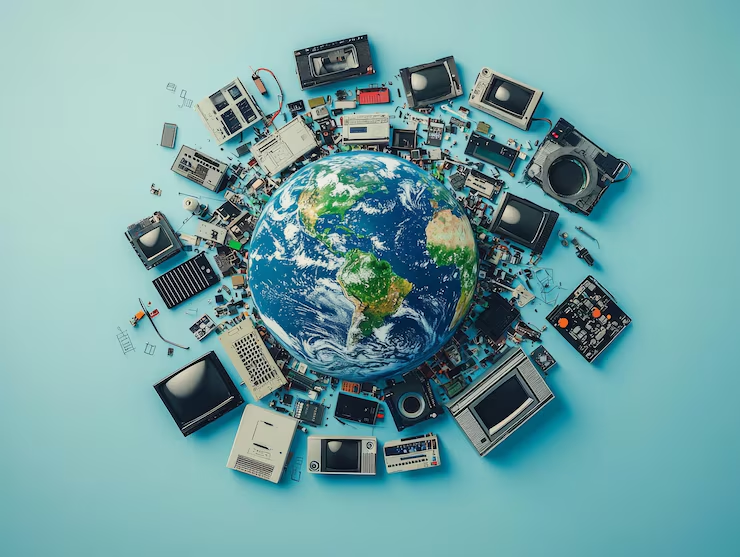
Convergence of Disciplines: World Conference on Electrical Electronics Computer Science and Information Technology
The modern engineering landscape increasingly blurs boundaries between pure electrical systems, computer science, and information technology. The World Conference on Electrical Electronics Computer Science and Information Technology embodies this multidisciplinary convergence.
Such conferences bring together experts in electrical engineering, software systems, cybersecurity, AI, and data analytics. Discussions span topics such as:
- Integrated circuit design methodologies
- Cyber-physical systems and IoT security
- Machine learning acceleration on embedded hardware
- Fault-tolerant power grids
- Smart control systems for autonomous machines
This interdisciplinary melding emphasizes how the electrical and electronics world is no longer a siloed discipline but a tapestry of interconnected expertise driving future innovation.
Artificial Intelligence and Engineering: Electrical and Electronics Engineering in a World of Artificial Intelligence
One of the most transformative trends in the electrical and electronics world is the rise of artificial intelligence (AI). AI enhances design processes, optimizes system performance, and enables intelligent automation across domains.
From AI-augmented circuit design tools that predict layout bottlenecks to neural-network-accelerated signal processing, AI is now embedded into engineering workflows. Research indicates that AI can significantly boost productivity in engineering tasks, optimize power consumption, and improve safety in construction and manufacturing processes. arXiv
Moreover, intelligent power distribution systems leverage machine learning to balance loads and reduce waste, while AI-enabled embedded systems empower autonomous robots and precision sensing networks.
This interplay of AI with electrical and electronics engineering underscores a fundamental truth: modern engineering is as much about data and algorithms as it is about electrons and circuits.
Milestone Achievements: First Electrical and Electronics World Wide
Tracing back to the earliest achievements in electrical and electronics engineering, milestones such as the invention of the transistor, the development of integrated circuits, and the early electrical generators stand as testaments to human ingenuity.
The first electrical and electronics world wide breakthroughs laid the foundation for the digital revolution. Pioneering figures like Nikola Tesla, Guglielmo Marconi, and John Bardeen exemplify how curiosity and scientific rigor can catalyze global transformation.
From the first practical AC power systems that electrified cities to the microprocessors that power modern devices, these historical landmarks echo through today’s technologies.
About the Author