
The Empowered Positive XR and Metaverse Ways to Work, Learn and Create reflects a structural evolution in how humans interact with digital systems spatially cognitively and collaboratively. Extended reality systems merge virtual augmented and mixed environments into persistent computational spaces where interaction is embodied rather than abstract.
The metaverse emerges not as a single platform but as an interoperable layer enabling spatial presence shared context and real time creation. This shift alters work execution learning acquisition and creative production by embedding computation directly into perception and action.
XR systems function as interface multipliers. They reduce translation loss between intent and execution by aligning digital objects with human spatial cognition. Research synthesized by the Virtual Human Interaction Lab demonstrates that embodied interaction improves comprehension retention and collaborative alignment compared to flat screen paradigms.
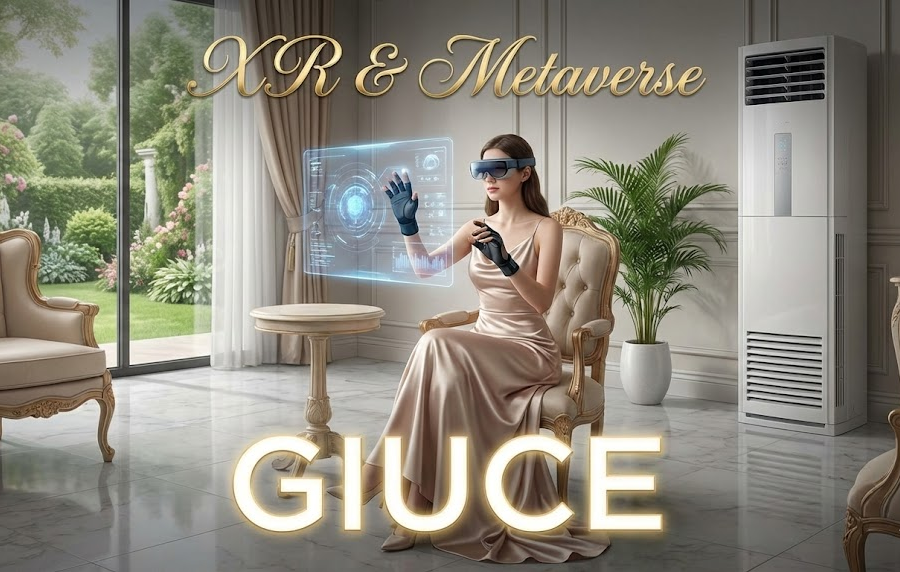
Empowered Positive XR and Metaverse Ways to Work, Learn and Create Infrastructure Foundations
Spatial Computing Architecture
XR environments rely on spatial computing frameworks that map physical and virtual coordinates into unified reference systems. Sensors track position gesture and gaze to anchor digital elements persistently. Technical overviews from Apple Spatial Computing outline how spatial anchoring stabilizes user interaction.
Low Latency Rendering Pipelines
Presence requires latency below perceptual thresholds. Rendering pipelines integrate edge computing and foveated rendering to maintain responsiveness. Performance benchmarks from NVIDIA Omniverse illustrate how distributed rendering sustains real time interaction.
Interoperability Standards
The metaverse depends on shared protocols for identity assets and physics. Open standards prevent fragmentation. Organizations such as the Khronos Group develop formats like OpenXR to enable cross platform compatibility.
Work Transformation Through Immersive Collaboration
Spatialized Team Environments
XR enables teams to collaborate within shared three dimensional workspaces. Artifacts persist spatially enabling contextual memory. Studies published by Harvard Business Review report improved alignment and reduced miscommunication in spatial collaboration settings.
Digital Twins for Operations
Digital twins replicate physical systems in real time. XR interfaces allow operators to interact with simulations intuitively. Industrial research from Siemens Digital Industries demonstrates efficiency gains in monitoring and maintenance.
Presence Based Communication
Non verbal cues such as posture and spatial proximity re enter digital communication. This restores bandwidth lost in text and video. Social presence research from University College London links embodiment with trust formation.
Learning Systems Reconfigured by XR
Experiential Knowledge Acquisition
XR enables learning through direct interaction rather than symbolic description. Learners manipulate variables and observe outcomes. Educational research summarized by the OECD Education Directorate confirms experiential learning improves transferability.
Simulation Based Skill Training
Complex skills such as surgery engineering and emergency response are trained in simulated environments. XR reduces risk while preserving realism. Medical training programs documented by Johns Hopkins Medicine validate simulation effectiveness.
Adaptive Learning Contexts
XR systems adapt difficulty and pacing based on learner behavior. Eye tracking and gesture data inform real time adjustment. Learning analytics frameworks from EDUCAUSE describe adaptive immersion models.

Empowered Positive XR and Metaverse Creative Production in Spatial Mediums
Three Dimensional Content Creation
Artists design directly within volumetric space. This removes abstraction layers inherent in two dimensional tools. Creative workflows explored by Adobe Immersive Media show reduced iteration friction.
Collaborative World Building
Multiple creators co construct environments simultaneously. Shared physics and lighting maintain coherence. Game development platforms such as Unity support real time collaborative scene editing.
New Narrative Structures
Storytelling expands beyond linear sequences into explorable spaces. Narrative becomes navigational. Media theory discussions from MIT Media Lab analyze spatial narrative forms.
Economic Systems Within the Metaverse
Empowered Positive XR and Metaverse Virtual Asset Economies
Digital goods acquire scarcity and ownership through tokenization. XR interfaces visualize ownership intuitively. Market analysis by Deloitte Technology examines economic activity in virtual environments.
Labor and Skill Markets
New roles emerge around world design moderation and experience engineering. Skill valuation shifts toward spatial literacy. Workforce studies from World Economic Forum track XR related job growth.
Persistent Commercial Spaces
Brands establish persistent environments rather than transient campaigns. XR commerce integrates exploration and transaction. Retail experimentation reported by Shopify Commerce Trends highlights immersive shopping models.
Governance Identity and Trust
Avatar Based Identity Systems
Identity in XR is represented through avatars. Authentication extends beyond credentials into behavioral consistency. Identity frameworks discussed by the Decentralized Identity Foundation inform avatar governance.
Privacy and Data Boundaries
XR systems collect biometric and spatial data. Governance requires strict boundary definition. Privacy research from the Electronic Frontier Foundation emphasizes informed consent and minimization.
Behavioral Norm Enforcement
Persistent spaces require rule enforcement. Empowered Positive XR and Metaverse automated moderation combines AI with human oversight. Policy analysis from Brookings Institution examines digital governance challenges.
Human Cognition and Embodiment Effects
Empowered Positive XR and Metaverse Spatial Memory Enhancement
Information anchored in space benefits from spatial memory systems. XR leverages hippocampal encoding mechanisms. Neuroscience research from Nature Neuroscience supports spatial memory advantages.
Cognitive Load Redistribution
Embodied interaction reduces symbolic processing load. This frees cognitive resources for reasoning. Cognitive ergonomics studies from Human Factors Journal analyze load distribution.
Sensorimotor Learning Integration
XR integrates perception and action loops. Learning becomes sensorimotor rather than abstract. Motor learning research from National Institutes of Health aligns with embodied training benefits.
Technical Constraints and Evolution Pathways
Hardware Ergonomics
Head mounted displays impose weight and comfort limits. Advances in optics and materials aim to reduce fatigue. Engineering updates from Meta Reality Labs detail ergonomic improvements.
Field of View and Resolution
Immersion correlates with field of view and pixel density. Tradeoffs persist between performance and clarity. Display technology reviews from IEEE Spectrum evaluate progress.
Network Dependency
XR requires stable bandwidth. Edge computing mitigates latency sensitivity. Network architecture research from 5G Americas explores XR optimization.
Integration With Artificial Intelligence
Intelligent Environment Agents
AI agents populate XR environments providing guidance and interaction. These agents adapt to user behavior. Research initiatives from OpenAI Research explore embodied AI concepts.
Content Generation Automation
Procedural generation accelerates world creation. AI generates assets textures and behaviors. Technical demonstrations from Epic Games Unreal Engine showcase generative pipelines.
Behavior Analytics
AI analyzes interaction patterns to improve design. Insights feed iterative refinement. Analytics frameworks from Google XR support behavior driven optimization.

Empowered Positive XR and Metaverse Long Term Cultural and Structural Impact
Redefinition of Presence
Presence decouples from physical location. This alters social and organizational structures. Sociological analysis from London School of Economics discusses virtual presence implications.
Knowledge Externalization
Spatial environments externalize knowledge structures. This supports collective cognition. Collective intelligence research from Santa Fe Institute aligns with distributed cognition models.
Persistent Shared Reality
XR metaverse systems create shared persistent realities. These realities influence norms behavior and creativity. Media studies from Oxford Internet Institute analyze long term effects.
Research and Standardization Momentum
Academic Industry Collaboration
Universities and companies co develop XR frameworks. This accelerates translation from research to deployment. Collaborative programs documented by NSF support XR research.
Open Source Ecosystems
Open source tools reduce barriers. Communities iterate rapidly. Platforms like OpenXR exemplify shared development.
Measurement and Evaluation
Standard metrics assess immersion usability and learning outcomes. Evaluation frameworks from ISO guide assessment.
Systemic Risks and Mitigation
Cognitive Overload Risk
Poorly designed XR environments increase fatigue. Design guidelines mitigate overload. Ergonomic standards from ISO Human Centred Design address risk.
Social Fragmentation
Virtual spaces may fragment social cohesion. Governance and design influence outcomes. Social research from Pew Research Center examines digital community dynamics.
Dependence on Proprietary Platforms
Platform concentration risks lock in. Interoperability standards counterbalance. Policy discussions from the European Commission address digital sovereignty.
Persistent Evolution Trajectory
Incremental Immersion Increase
Immersion increases gradually through hardware and software refinement. Adoption follows capability thresholds.
Cross Domain Convergence
Work education and creativity converge within shared spatial systems. Boundaries blur.
Knowledge Compounding
Each deployed environment contributes design knowledge. This compounds ecosystem maturity.
About the Author


